The Libérateur
On the evening of 20 April 1797 the armed French vessel Libérateur d'Italie attempted to enter the lagoon despite the ban on foreign armed ships.
A Renaissance fortress guarding the sea entrance to Venice, built to stop an enemy fleet and transformed by the novel into the stage of the Serenissima's final reckoning.
After the wars of the League of Cambrai, Venice understood that its main maritime approach required a new defensive system. In 1534 Michele Sanmicheli was asked by the Council of Ten to prepare a plan for the fortification of the lagoon; in 1543, based on his design and on the military directions of artillery captain Antonio da Castello, construction of Forte Sant'Andrea began. The main works continued until 1549.
The fortress had 42 gun emplacements along its curtains and central bastion, almost at water level, allowing crossfire against ships attempting to force the Lido harbour entrance. It was not only a military machine: its monumental Istrian-stone façade announced the power of the Serenissima to travellers arriving from the sea.
The Forte was not designed as a prison. Yet in 1743 Giacomo Casanova was confined there for several months and later left a description of life inside the fortress in his memoirs.
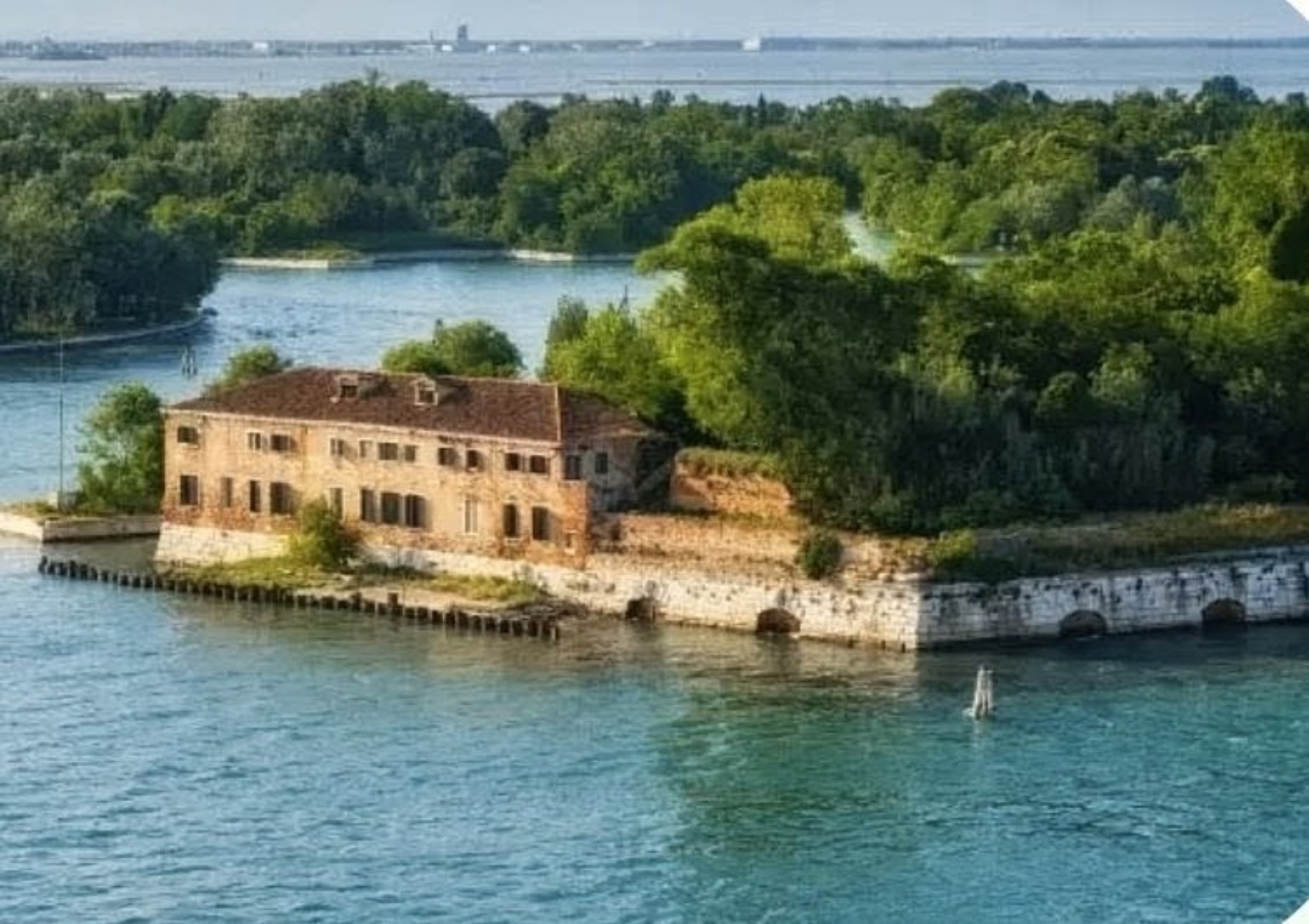
For centuries, the fortress itself had served as a deterrent. Its artillery was installed in moments of danger and the structure had also undergone firing tests. But in combat against an enemy vessel, Forte Sant'Andrea opened fire only once.
On the evening of 20 April 1797 the armed French vessel Libérateur d'Italie attempted to enter the lagoon despite the ban on foreign armed ships.
Commander Domenico Pizzamano ordered the guns to fire. The French vessel was hit, boarded and captured, in what became the Republic of Saint Mark's last armed defence.
The incident became part of Napoleon's mounting pressure on Venice. Only weeks later the Great Council voted the Republic out of existence.
Sant'Andrea was not an institutional prison in the ordinary sense, but it was also used to keep people considered troublesome or in need of close control. Casanova's confinement makes the novel's use of the Forte as a secret prison historically plausible without presenting fiction as fact.
In La Resa dei Conti nel Giardino della Serenissima, Forte Sant'Andrea changes meaning. The fortress built to prevent an enemy from entering Venice becomes the place from which danger attempts to seize the Republic from within.
The Masked Man drags the Doge to the Forte in chains after killing the Dogaressa and proclaims himself “Protector of the Serenissima”, an office foreign to the Republic's constitutional order. In the fortress yard he stages a mock tribunal, turning a symbol of Venetian defence into the theatre of his own power.
Meanwhile Count Pompilio di Porcia, Isabella Cortese and Paolo Sarpi cross Venice by night to attempt the impossible. The Forte becomes the point where the Serenissima's military history and its imagined collapse overlap.
Forte Sant'Andrea opens the Venetian branch of The Alchemist's Routes. From here the itinerary can climb towards Asolo, enter the Alchemist's House in Tambre and cross Carnia to Casa Pianese. Different places, one rule: documented history first, the novel second.
Sanmicheli's fortress, Casanova, 1797 and the Masked Man's imagined reckoning.
Find Venice on the narrative map →Caterina Cornaro's court, Pietro Bembo and the narrative shadow of Flaminio Torriani.
Go to Asolo Castle →The Alchemist's House: Athanor, symbols and an alchemical path between history and fiction.
Go to the Alchemist's House →Historical references: Treccani, Michele Sanmicheli; Treccani, Giacomo Casanova; Venezia Unica / Arte.it, Forte di Sant'Andrea; Voga Venezia, Forte di S. Andrea. The Masked Man, the Doge, the Dogaressa, Isabella Cortese, Paolo Sarpi and Pompilio di Porcia belong explicitly to the fictional narrative.