The Alchemist's Roads · Porcia

Castello di Porcia: eight centuries, one family.

The castle of the Counts and Princes of Porcia and Brugnera, between feudal memory, great European guests, wine and the pact that changes the destiny of the novel.

History

A lineage crossing the centuries.

Porcia's documentary roots are medieval. A 1178 document refers to the place as Castro Porczile; in 1214 the division of the Prata family's possessions contributed to the autonomous formation of the fief of Porcia and Brugnera.

The castle complex was not built in a single phase. A 1492 family record by Count Giacomo di Porcia describes the fortress, its strong crenellated tower, the walls and eight smaller towers. Over the centuries the castle was enlarged, transformed, damaged by earthquakes and wars, yet it remained the symbolic centre of a family whose name survives to this day.

The historical line is still represented and remains directly connected with the agricultural estates of Porcia and Azzano Decimo.
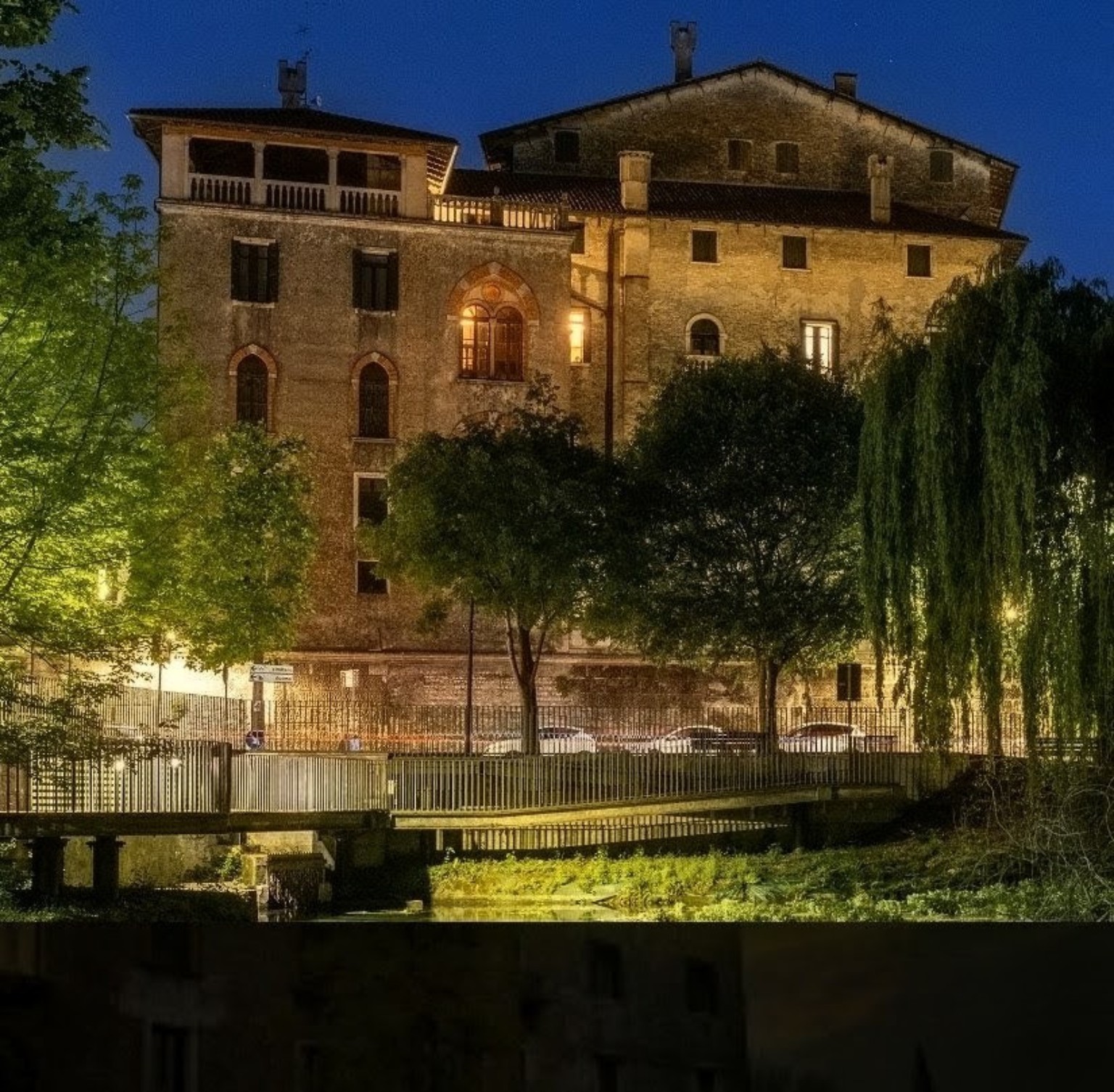
Castello di Porcia, historic residence of the Counts and Princes of Porcia and Brugnera
Illustrious guests

From the Empire to the French court.

Family records document the presence at the castle of Emperor Charles V in 1532 and Henry III of France in 1574.

This places Porcia along the major diplomatic and political routes of sixteenth-century Europe, the very century in which the Alchemist saga is set.

A living agricultural history

Wine is not a decorative detail.

The agricultural company Principi di Porcia e Brugnera describes eight documented centuries of agricultural tradition. Today the estates include Castello di Porcia and the Azzano farm, with vineyards in the Friuli Grave and Lison-Pramaggiore DOC areas.

Among the family's wines is Torre Colombera, a name that carries the architectural and family memory of the estate into the present.

From the novel · Chapter XX

The Pact of Porcia.

In The Reckoning in the Garden of the Serenissima, Isabella Cortese reaches the castle after days on the run. She is no longer looking merely for protection: she arrives with alchemical weapons prepared at the Alchemist’s House in Tambre and asks Count Pompilio di Porcia to choose a side.

The Count receives her with suspicion. Beside him stand Munir and Jabari, the two Moors portrayed in the novel as brothers-in-arms whom he met during campaigns in the Holy Land. Together with the Count, they weigh Isabella's remorse against the need to stop the Masked Man.

When Pompilio offers Isabella his hand, the pact is sealed: Count, Moors and Alchemist become a single front. From Porcia emerges the alliance that will lead to the final battle.

Here the novel stops being an escape. It becomes a war.
The dramatic centre

Not simply a refuge.

Porcia is where Isabella must do something harder for her than any alchemical formula: admit her guilt and ask for trust.

The Count does not grant absolution. He grants a chance. That difference makes the Pact one of the novel's strongest moral turning points.

Three elements of the Pact

Honour, redemption, alliance.

Pompilio

The Count fights out of conviction, not self-interest. In the novel he is the military and moral counterweight to the Masked Man's ambitions.

Munir and Jabari

Not mere servants, but brothers-in-arms. They recognise that the woman standing before the Count is no longer the Isabella who betrayed Venice.

The arsenal

The alchemical weapons Isabella carries turn knowledge into action. They are no longer meant to make gold: they are meant to open the road towards Sant'Andrea.

The thread of wine

Reality and fiction almost touch.

In real history, the Porcia family still maintains a centuries-old wine tradition. In the novel, wine becomes the final image through which Pompilio binds his name to his native land: not to battles, but to the vineyards of Porcia and to a wine that tastes of eternity.

It is one of those moments when fiction can rest on reality without forcing it: a lineage that crosses centuries and a character who, at the decisive moment, entrusts memory not to the sword, but to the land.

History and fiction

The boundary remains clear.

The castle, the family, Charles V, Henry III and the agricultural tradition belong to documented history. Pompilio, Munir, Jabari, Isabella, the alchemical arsenal and the Pact belong to the novel's fictional construction.

The two dimensions are not confused. They are made to speak to each other.

Continue the journey

Porcia closes the circle of the first Roads.

From the Pact, the journey can return to the places that prepared it: Sacile and Palazzo Ragazzoni, Polcenigo and the springs, Tambre and the Alchemist's House, Asolo and Forte Sant'Andrea.